I am delighted to share with you today a guest post from Karen Mahoney, debut author of The Iron Witch, about the Fey you'll find in her novel.
Where the Wood Elves Are
It’s true that in recent years there have been a lot of Faerie books appearing – especially in the YA market – so what made me want to tackle these paranormal
creatures? And, perhaps more importantly, what makes my approach different?
I freely admit to being a big fan of Holly Black and Melissa Marr’s work, but the fey element in The Iron Witch is less about faeries and more specifically about the dark elves that dwell in the dwindling remains of Ironwood Forest (the woodland on the outskirts of my created city of Ironbridge). More ‘regular’ (human-sized) faeries do exist in my world, but they have long since departed the human world and have returned to Faerie, their own realm, leaving behind some solitary fey – who try to blend in with humanity – while also deserting the entire race of wood elves.
The wood elves – or dark elves, as they become known – have become bitter and twisted over the centuries, resentful of their fate, forced to make a home on the edges of human existence. The human alchemists my book are charged with protecting humanity from the fey, and the dark elves are all that are left in terms of a real threat.
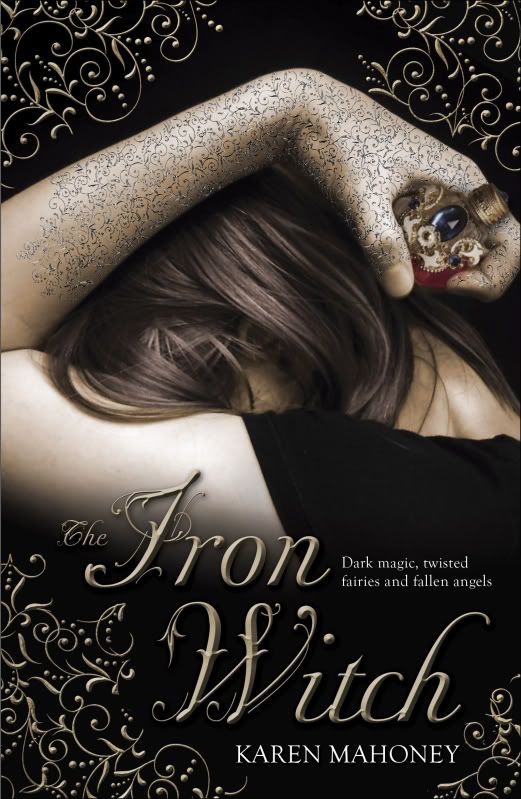 My elves are nothing like in The Lord of the Rings, though! As Navin says in The Iron Witch: “It didn’t look much like Orlando Bloom…” If they have any ‘Tolkienesque’ qualities at all, I’d say they’re closer to Gollum than Legolas, although their limbs are made of living wood and they are almost entirely covered with lichen and moss. To be honest, I didn’t really base them on anything specific in mythology or folklore – they came out of a particularly dark corner of my imagination, as I love the idea of creatures made of earth and tree; part of nature and yet separate, as they don’t even belong in the human world. They are outcasts, which in some ways mirrors how my main character, Donna Underwood, feels about her life and the things that make her different.
There might be one or two elements of Norse mythology that have slipped into my interpretation of the dark elves, but only things like how some sources say that the elves were aligned with demons (demons become more important as the Iron Witch trilogy develops).
Mostly, they are unique to the fictional world of Ironbridge – I hope you find them as creepy as they’re meant to be! ;)
Thank you, Kaz, for such a great guest post! Be sure to check out Kaz's website. The Iron Witch was released on 20th January, buy your copy from Amazon UK or Amazon US.
Continue reading Guest Post from Karen Mahoney: Where the Wood Elves Are
Where the Wood Elves Are
It’s true that in recent years there have been a lot of Faerie books appearing – especially in the YA market – so what made me want to tackle these paranormal
creatures? And, perhaps more importantly, what makes my approach different?
I freely admit to being a big fan of Holly Black and Melissa Marr’s work, but the fey element in The Iron Witch is less about faeries and more specifically about the dark elves that dwell in the dwindling remains of Ironwood Forest (the woodland on the outskirts of my created city of Ironbridge). More ‘regular’ (human-sized) faeries do exist in my world, but they have long since departed the human world and have returned to Faerie, their own realm, leaving behind some solitary fey – who try to blend in with humanity – while also deserting the entire race of wood elves.
The wood elves – or dark elves, as they become known – have become bitter and twisted over the centuries, resentful of their fate, forced to make a home on the edges of human existence. The human alchemists my book are charged with protecting humanity from the fey, and the dark elves are all that are left in terms of a real threat.
My elves are nothing like in The Lord of the Rings, though! As Navin says in The Iron Witch: “It didn’t look much like Orlando Bloom…” If they have any ‘Tolkienesque’ qualities at all, I’d say they’re closer to Gollum than Legolas, although their limbs are made of living wood and they are almost entirely covered with lichen and moss. To be honest, I didn’t really base them on anything specific in mythology or folklore – they came out of a particularly dark corner of my imagination, as I love the idea of creatures made of earth and tree; part of nature and yet separate, as they don’t even belong in the human world. They are outcasts, which in some ways mirrors how my main character, Donna Underwood, feels about her life and the things that make her different.There might be one or two elements of Norse mythology that have slipped into my interpretation of the dark elves, but only things like how some sources say that the elves were aligned with demons (demons become more important as the Iron Witch trilogy develops).
Mostly, they are unique to the fictional world of Ironbridge – I hope you find them as creepy as they’re meant to be! ;)
Thank you, Kaz, for such a great guest post! Be sure to check out Kaz's website. The Iron Witch was released on 20th January, buy your copy from Amazon UK or Amazon US.
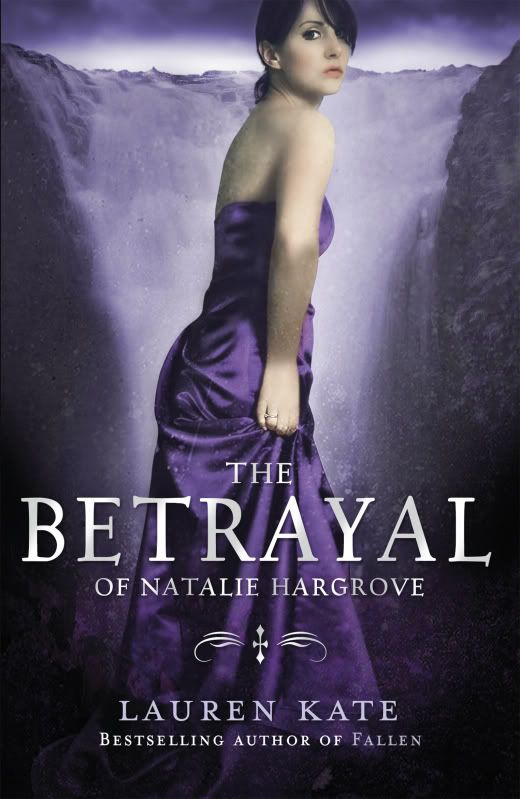 The Betrayal of Natalie Hargrove by Lauren Kate (6th Jan 2011) - Lauren Kate's irresistible first novel, THE BETRAYAL OF NATALIE HARGROVE, features the most ruthlessly ambitious heroine since Lady Macbeth. Natalie is utterly determined to cement her position at the top of the high school social ladder by becoming prom queen. When it looks like an interfering ex-boyfriend might get in her way, she devises a little prank to humiliate him. But when the prank goes devastatingly wrong, Natalie starts to lose control of her life. Caught in a web of dark secrets, shame and abuse of power, it's not guilt that eventually defeats Natalie. It's fate: the only thing she can't control... From Amazon UK